
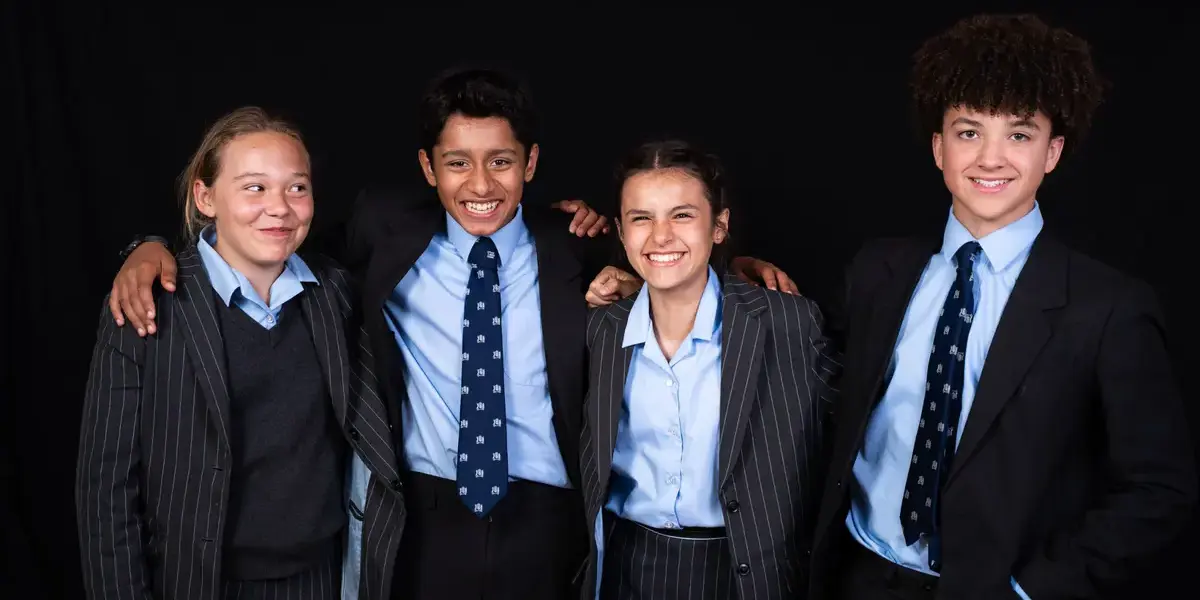
- Location
- Ipswich
- Age range
- 0–18
- Attendance
- Day and boarding
About Ipswich School
Schoolscout directory record ·
Ipswich School offers a rich educational experience that nurtures both academic excellence and personal growth. With a long-standing tradition of fostering...
Supplementary catalogue notes ·
Ipswich School is one of the oldest schools in England, with origins traceable to c. 1399. The school was formally re-endowed by Queen Elizabeth I in 1565 and has occupied its present site on Ivry Street, north of the Ipswich town centre, since 1852. It is co-educational and educates around 1,132 pupils aged 3-18 across an integrated Pre-Prep, Preparatory School, Senior School and Sixth Form. The Headmaster is Nicholas Weaver. The school is a member of the HMC and the BSA, and its principal Victorian buildings, in distinctive Tudor-style red brick, are a defining feature of north Ipswich.
Ipswich School's most internationally significant scientific alumnus is Sir Charles Scott Sherrington OM PRS, who shared the 1932 Nobel Prize in Physiology or Medicine for his foundational work on the synapse and the functioning of the nervous system. Sherrington coined the term "synapse" and his Integrative Action of the Nervous System (1906) defined the early-twentieth-century framework for neurophysiology. The Bristol physicist and Royal Society Fellow Sir Charles Frank FRS — co-developer of dislocation theory in crystals — was another distinguished Old Ipswichian.
In statecraft, the school's most famous alumnus is Cardinal Thomas Wolsey, born around 1473 in Ipswich, who as Lord Chancellor under Henry VIII became the most powerful figure in the English government before his fall from grace in 1529 over his failure to secure the royal divorce from Catherine of Aragon. Wolsey's birthplace is commemorated near the school. In Victorian literature, Sir H. Rider Haggard — author of King Solomon's Mines, She: A History of Adventure, and Allan Quatermain — was educated at Ipswich.
The school's art alumni include Sir Edward Poynter Bt, who served as President of the Royal Academy from 1896 to 1918; the children's book illustrator and war artist Edward Ardizzone (the Little Tim books); and the Punch artist Charles Keene. In imperial and military history: Sir John Gordon Sprigg, who served four times as Prime Minister of the Cape Colony in South Africa; Lieutenant-General Sir Edwin Alderson, the first commander of the Canadian Expeditionary Force in World War I; and Rear Admiral Sir Philip Broke, whose victory over the USS Chesapeake in 1813 is commemorated by the Broke Hall family seat near Ipswich. The school operates a substantial bursary programme via the Old Ipswichian Foundation.
Additional source record ·
Education at Ipswich School goes beyond examinations. It fosters curiosity, resilience and a lifelong love of learning. Our staff guide each pupil on their individual journey, developing confidence, creativity and a sense of responsibility. The campus reflects the school’s heritage, from historic buildings to modern facilities. Tradition is valued as a foundation for progress, giving pupils the tools to thrive in a changing world.
With a history spanning over 600 years, the school combines academic excellence with a supportive environment, creating a community where students grow both intellectually and personally.
Whether a child joins our Nursery, Prep, Senior or Sixth Form, they will find a community that values every individual, celebrates achievement and nurtures the potential to create an extraordinary future.
School life and highlights in the catalogue
- Founded c. 1399 — over 625 years of history
- One of the oldest schools in East Anglia and the entire eastern half of England
- Co-educational ages 3-18
- ≈1,132 pupils across Pre-Prep, Prep, Senior and Sixth Form
- HMC and BSA member
- Set in the centre of Ipswich, north of the town centre, with Victorian Tudor-style brick buildings
- Cardinal Wolsey — England's most powerful Chancellor under Henry VIII — was a pupil
- Nobel laureate Sir Charles Sherrington (Medicine 1932) was educated here
- 1,132-pupil community
- Day and boarding places available
- Church of England foundation
- A-Level A*-B*: 38% achieve AAB+
Education and school life
- Education levels
- Nursery, Pre-Prep, Prep, Senior, Sixth Form
- Age range
- 0–18
- Attendance
- Day and boarding
- Pupil intake
- Co-educational
- School type
- Mainstream
- Headteacher / principal
- Mr N Gregory
- Religious ethos
- Church of England
- Listed inspectorate
- ISI
Subjects and qualifications
- Sciences (Nobel laureate Sir Charles Sherrington — Physiology/Medicine 1932)
- Literature (Sir H. Rider Haggard — King Solomon's Mines, She)
- History (Cardinal Wolsey, Henry VIII's Chancellor, was a pupil)
- Visual arts (Sir Edward Poynter — President of the Royal Academy)
- Music
- Mathematics
- Sport
Listed memberships and accreditations
- HMC (Headmasters' and Headmistresses' Conference)
- BSA (Boarding Schools Association)
- ISI (Independent Schools Inspectorate)
Progression and destinations in the catalogue
- Oxbridge
- Russell Group (Cambridge, UCL, Imperial, Edinburgh, East Anglia)
- Medical schools
- International universities
Alumni notes
- Cardinal Thomas Wolsey (c. 1473-1530 — Lord Chancellor under Henry VIII; Archbishop of York)
- Sir H. Rider Haggard (Victorian novelist — King Solomon's Mines, She, Allan Quatermain)
- Sir Charles Scott Sherrington OM (Nobel Prize in Physiology or Medicine, 1932 — synaptic transmission and neurophysiology)
- Sir Edward Poynter Bt (artist; President of the Royal Academy 1896-1918)
- Sir John Gordon Sprigg (Prime Minister of the Cape Colony four times between 1886-1904)
- Thomas Howard, 2nd Duke of Norfolk (soldier and statesman; victor of Flodden Field, 1513)
- Rear Admiral Sir Philip Broke KCB (Royal Navy captain who defeated the USS Chesapeake in 1813)
- Lieutenant-General Sir Edwin Alderson (first commander of the Canadian Expeditionary Force in WW1)
- Sir Charles Frank FRS (Bristol physicist; co-developer of dislocation theory in crystals)
- Edward Ardizzone (war artist and children's book illustrator — Little Tim series)
- Percy John Heawood (mathematician; Vice-Chancellor of Durham University)
- Charles Keene (artist for Punch magazine)
Supporting school records
These dated records may contain different information. Ask our team about current details.
Supplementary catalogue notes ·
- Headteacher / principal
- Nicholas Weaver (Headmaster)
- Founded
- 1399
- Campus setting
- Urban
- Scholarships / bursaries
- Options indicated; confirm availability and eligibility.
Additional source record ·
- Scholarships / bursaries
- Options not indicated in this record; availability unconfirmed.
Pupil information
- Total pupils
- 1,132
- Boys
- 635 · 56.1%
- Girls
- 497 · 43.9%
- Pupils receiving SEN support
- 77 · 6.8%
- Pupils with an EHCP
- 0 · 0%
Counts and percentages are reproduced from the directory. SEN means special educational needs; EHCP means Education, Health and Care Plan. A pupil census year is not supplied.
A-Level results
- Results year
- 2025
- Progress score
- 0.26 (Above Average)
- Average grade
- B+
- AAB percentage
- 38.20%
Results refer to the year shown. The directory does not provide a cohort size or a full methodology for these measures.
Tuition and costs
The fee year is not specified. Ask our team about current fees, VAT and included services.
Schoolscout directory record ·
| Attendance | GBP · Period and VAT unverified |
|---|---|
| Day | £4,987.2 – £8,848.8 |
| Boarding | £8,900.4 – £17,991.6 |
Current fees and VAT treatment require confirmation from the school. Directory labels are not a verified school quotation.
Check whether boarding, meals, registration, deposits, examinations, trips and guardian arrangements are included. Amounts are in pounds sterling (GBP), without currency conversion.
Ask about current feesPlanning your application
Talk to the UniCampus team about entry points, available places, assessments, language requirements and application dates. Admission arrangements vary by age and year group.
Read the directory’s school and admissions questions below.
MEC guidance can help you compare schools and organise the questions and documents needed for your next step. An enquiry or comparison does not submit an application.
Explore MEC guidanceQuestions in the school directory
Schoolscout directory record ·
What type of school is Ipswich School?
Ipswich School is a co-educational independent mainstream school for pupils aged 0 to 18, located near Ipswich in Suffolk. The school offers education from Nursery through to Sixth Form, with pathways leading to GCSEs and A Levels.
How do I apply to Ipswich School?
Historical directory text below. Its fees, billing period and VAT have not been verified with the school.
Most families apply to Ipswich School 1–2 years before entry, with a process that can include tests, interviews and school reports. See the private school admissions timeline for when to apply and what to expect.
What are the fees at Ipswich School?
Historical directory text below. Its fees, billing period and VAT have not been verified with the school.
Fees at Ipswich School are approximately £4,987–£17,991 per term, depending on the year group and whether pupils board. Families can learn more about UK private school fees and what is typically included.
Is Ipswich School a day or boarding school?
Ipswich School is a day and boarding school.
Is Ipswich School selective?
Admissions to Ipswich School are selective, with entry based on overall fit and, where relevant, academic assessment.
School location and enquiries
- Street address
- Henley Road
- Town / locality
- Ipswich
- County
- Suffolk
- Region
- East of England
- Postcode
- IP1 3SG
- Country
- United Kingdom
Talk to our team about this school, current fees and your application.
Enquire about this schoolView the school locationHenley Road, Ipswich, Suffolk, East of England, IP1 3SGSchoolscout directory record ·
Supplementary catalogue notes ·
Additional source record ·
Collection and catalogue update dates are shown above; they are not fee years or pupil census dates. Source text is retained in its original language. The school’s official information takes precedence for current admissions, programmes and fees.