
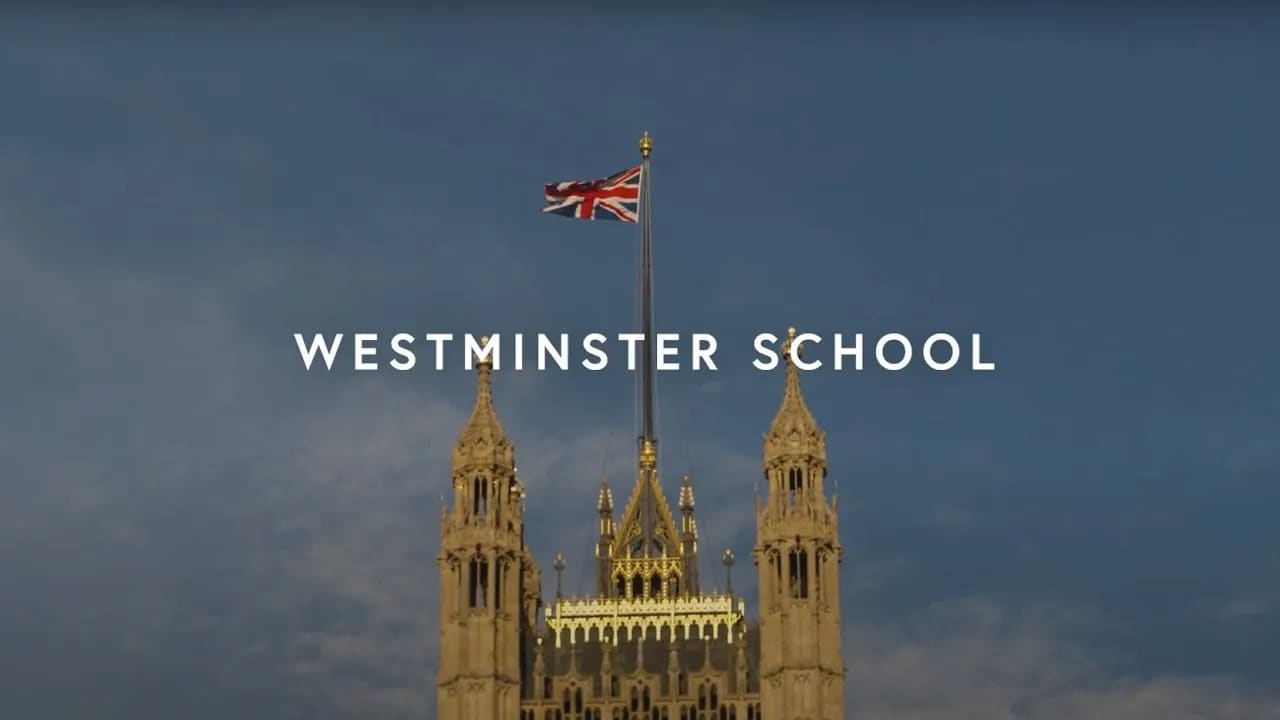
- Location
- London
- Recorded age range
- 13–18
- Education
- British · A-Level
About Westminster School
A 12th-century day+boarding school in the precincts of Westminster Abbey — A-Level with one of UK independent education's strongest STEM departments, ~750 pupils ages 13-18, consistent Oxbridge/Ivy outcomes.
Westminster School traces continuously to 1179, when it operated as a monastic school attached to Westminster Abbey, and was re-founded by Elizabeth I in 1560. Today around 750 pupils aged 13-18 study on the school's central London site between the Abbey and the Houses of Parliament (Westminster Under School, ages 7-13, operates as a separate institution nearby). The senior school is co-educational at sixth form (since 1973) and became fully co-ed in 2021. The curriculum is A-Level with a strong reputation in STEM — the Mathematics department is one of the most highly-regarded in UK independent education. Recent leavers' destinations are dominated by Oxford and Cambridge with significant Ivy-League and US selective university placement.
School life and areas of focus
- Founded 1179 — among the oldest schools in continuous operation
- Adjacent to Westminster Abbey and Parliament
- A-Level with one of the strongest UK STEM departments
- Consistent Oxford / Cambridge / Ivy League outcomes
- 750 pupils — small for a top-tier London school
- Fully co-educational since 2021
- Founded c. 1179 as Westminster Abbey's monastic school — 847-year history
- Re-founded 1560 by Elizabeth I as a royal school ("Queen Elizabeth's foundation")
- Boys-only ages 7-18 (Sixth Form co-educational since 1973 — first major HMC school to admit girls)
- ≈779 pupils with substantial boarding population
- Set in the Westminster Abbey precincts — Dean's Yard, central London
- One of the original 'Nine Great Schools' of England
- Consistently top 1-2 UK schools by Oxbridge offer rate
- Has produced 7 British Prime Ministers; Christopher Wren; John Locke; Andrew Lloyd Webber
- Substantial bursary programme via Queen's Scholars
- 779-pupil community
- Day and boarding places available
- Church of England foundation
- A-Level A*-B*: 70% achieve AAB+
- Strong Oxbridge progression
Education and school life
Explore the curriculum and subjects below. Our team can help you find out about subject choices, year groups and programme availability.
- Programme type
- International school
- Curriculum
- British, A-Level
- Teaching language
- English
- Campus setting
- urban
Subject areas
- Mathematics
- Further Mathematics
- Physics
- Chemistry
- Biology
- English Literature
- Classics (Greek + Latin)
- History
- Geography
- Economics
- Politics
- Philosophy
- French
- German
- Spanish
- Mandarin
- Art
- Music
- Theatre
- Computer Science
- Classics (continuous since 1179)
- Music (Andrew Lloyd Webber alumnus)
- Sciences
- Modern languages
- Drama
- Sport
Listed memberships and accreditations
- ISI (Independent Schools Inspectorate)
- HMC (Headmasters' and Headmistresses' Conference)
- The Eton Group
- Westminster Abbey (founding ecclesiastical parent)
- Clarendon School (one of the original 'Nine Great Schools' of England)
- Eton Group
Study and progression pathways
- Oxford
- Cambridge
- Ivy League
- Imperial College
- LSE
- UCL
- Oxbridge (consistently top 1-2 UK schools by Oxbridge offer rate)
- Russell Group (Cambridge, Imperial, UCL)
- US Ivy League universities (Harvard, Princeton, Yale)
- International universities
- Oxbridge
Academic profile in the catalogue
Catalogue review date: 2026-05-18
- Typical class size
- 14 · catalogue record
- Student / teacher ratio
- 1:8 · catalogue record
The source does not specify a measurement year for these figures. Ask our team about current class sizes and staffing.
Campus, boarding and student community
Catalogue profile
- Founded
- 1179
- Recorded student population
- 750
- Campus setting
- urban
- Boarding
- Listed in the catalogue
- Co-education
- Listed as co-educational
School-wide directory record
Schoolscout · Source record dated 2026-05-18
- School stages
- Senior, Sixth Form
- Directory age range
- 13-18
- Student intake
- Co-educational
- Attendance
- Day and boarding
- Religious ethos
- Church of England
- Inspectorate
- ISI
- Total pupils
- 779
- Boys · number / share
- 640 · 82.16%
- Girls · number / share
- 139 · 17.84%
- Pupils receiving SEN support · number / share
- 158 · 20.28%
- Pupils with an EHC plan · number / share
- 2 · 0.26%
Directory and catalogue figures are shown separately because their age groups or record dates may differ.
Recorded examination results
Schoolscout · Source record dated 2026-05-18
- Qualification
- A-level
- Results year
- 2025
- Average grade
- A+
- Progress score
- 0.07 (Average)
- AAB or higher
- 70.10%
Results are for the year shown, separately from the estimated catalogue indicators.
Tuition and costs
Recorded GBP school fees
Schoolscout · Source record dated 2026-05-18
| Attendance | Recorded range |
|---|---|
| Day fees | £15,451.20 – £16,650.00 |
| Boarding fees | £21,992.40 |
These historical directory amounts are not a confirmed school quotation. The billing period, VAT, academic year and included costs need confirmation from the school.
Catalogue USD figures
Estimated catalogue fees · USD
Catalogue figures are shown in US dollars (USD). The fee period and academic year are not specified in this record. UK institutions generally publish their own fees in pounds sterling (GBP); check the current fee schedule rather than treating this range as a GBP price.
Ask the UniCampus team about the fee period, entry year, boarding and additional costs.
Ask about current feesPlanning your application
Entry requirements depend on the school, age group and programme. Talk to the UniCampus team about school reports, language requirements, assessments and your application timeline.
- Catalogue application window
- 13+ Common Entrance pre-test (Year 6); 16+ Sixth-Form by November
- Listed intake
- September 2026
These catalogue notes do not confirm an available place or a current deadline. MEC guidance can help you organise a shortlist and prepare questions for the school.
Support recorded in the catalogue
- Scholarships or bursaries
- Listed; eligibility and availability need confirmation
- Visa application support
- Listed; confirm what assistance is provided
Source notes and alternative records
Dated background research is retained below; source descriptions may differ and have not been newly verified by UniCampus.
School background research · 2026-05-31
School background notes
Source record dated 2026-05-31 · Source text retained in English
Westminster School traces its educational lineage to the monastic school of Westminster Abbey, which is recorded as operating from at least the year 1179 — making it among the oldest continuous educational institutions in England, an 847-year history. The school was re-founded by royal charter of Elizabeth I in 1560 as "The Queen's Scholars of the Royal College of St Peter at Westminster" — and is for that reason often called "Queen Elizabeth's foundation". The school sits today in the medieval precincts of Westminster Abbey, on Dean's Yard in central London, immediately behind the Houses of Parliament and the Abbey itself — the most architecturally distinguished school site in the United Kingdom. The Head Master is Dr Gary Savage.
Westminster is boys-only ages 7-18 with around 779 pupils, with a substantial boarding population. The Sixth Form (Years 12-13) has been co-educational since 1973 — Westminster was the first major HMC boys' school in England to admit girls. The school was named in the Clarendon Commission of 1864 as one of the "Nine Great Schools" of England. The school is consistently ranked among the very top one or two UK schools by A-Level results and Oxbridge offer rate, often as the highest-performing UK school by Oxbridge offers as a fraction of leavers.
Westminster has produced seven British Prime Ministers — including Henry Addington, John Russell (Whig PM 1846-52 and 1865-66) and others — and a remarkable concentration of major figures in seventeenth-century English intellectual life. Sir Christopher Wren, the architect of St Paul's Cathedral, the Royal Greenwich Observatory, the Royal Hospital Chelsea, and around fifty City of London churches built after the Great Fire of 1666, was a Westminster boy. John Locke, the philosopher whose Two Treatises of Government (1689) is the founding text of liberal political theory and whose Essay Concerning Human Understanding established empiricism as the dominant English philosophical tradition, was at Westminster. John Dryden, the Poet Laureate from 1668 to 1689 and the dominant English literary figure of the Restoration period, was a Westminster boy.
In music, Sir Andrew Lloyd Webber, Baron Lloyd-Webber — the most commercially successful composer of musical theatre in history, whose Jesus Christ Superstar, Cats, The Phantom of the Opera (the longest-running musical in Broadway history) and Evita have grossed several billion dollars at the global box office — was a Westminster boy. The Pogues frontman and lyricist Shane MacGowan, whose Fairytale of New York (1987) remains among the best-selling Christmas singles in UK chart history, was a Westminster boy. In politics, Tony Benn, 2nd Viscount Stansgate — the Labour Cabinet minister who renounced his peerage in 1963 (becoming Tony Benn) and who served as the defining figure of the post-war Labour left for forty years — was at Westminster. The Oscar-winning actor and writer Sir Peter Ustinov KBE — Spartacus, Topkapi, the Hercule Poirot films of the 1970s — was a Westminster boy.
The school operates a substantial bursary programme via Queen's Scholars, the descendants of the original Elizabethan royal endowment.
- Founded · source note
- 1179
- Campus setting · source note
- urban
- Religious ethos · source note
- Church of England (Westminster Abbey foundation)
- School leadership · source note
- Dr Gary Savage (Head Master)
- Scholarships · source note
- Mentioned in saved research; confirm current terms
Additional subject and programme notes
- Classics (continuous since 1179)
- Music (Andrew Lloyd Webber alumnus)
- Mathematics
- Sciences
- Modern languages
- Drama
Listed education pathways
- Oxbridge (consistently top 1-2 UK schools by Oxbridge offer rate)
- Russell Group (Cambridge, Imperial, UCL)
- US Ivy League universities (Harvard, Princeton, Yale)
- International universities
Memberships and accreditations in the source
- HMC (Headmasters' and Headmistresses' Conference)
- Westminster Abbey (founding ecclesiastical parent)
- Clarendon School (one of the original 'Nine Great Schools' of England)
- Eton Group
- ISI (Independent Schools Inspectorate)
School-life notes
- Founded c. 1179 as Westminster Abbey's monastic school — 847-year history
- Re-founded 1560 by Elizabeth I as a royal school ("Queen Elizabeth's foundation")
- Boys-only ages 7-18 (Sixth Form co-educational since 1973 — first major HMC school to admit girls)
- ≈779 pupils with substantial boarding population
- Set in the Westminster Abbey precincts — Dean's Yard, central London
- One of the original 'Nine Great Schools' of England
- Consistently top 1-2 UK schools by Oxbridge offer rate
- Has produced 7 British Prime Ministers; Christopher Wren; John Locke; Andrew Lloyd Webber
- Substantial bursary programme via Queen's Scholars
Notable alumni listed in the source
- 7 British Prime Ministers including Henry Addington (PM 1801-04), Spencer Compton, John Russell (1st Earl Russell — PM 1846-52, 65-66)
- Sir Christopher Wren (architect — St Paul's Cathedral, Royal Greenwich Observatory, Royal Hospital Chelsea)
- John Locke (philosopher — Two Treatises of Government 1689; founding work of liberalism; Constitution of South Carolina; Essay Concerning Human Understanding)
- John Dryden (Poet Laureate 1668-89; Absalom and Achitophel)
- Sir Andrew Lloyd Webber, Baron Lloyd-Webber (composer — Jesus Christ Superstar, Cats, The Phantom of the Opera, Evita — the most commercially successful composer of musicals in history)
- Shane MacGowan (The Pogues — Fairytale of New York)
- Tony Benn, 2nd Viscount Stansgate (Labour Cabinet minister; renounced peerage; defining figure of post-war Labour left)
- Sir Peter Ustinov KBE (Oscar-winning actor — Spartacus, Topkapi; novelist; television presenter)
- Henry Mayhew (Victorian journalist — London Labour and the London Poor)
- Richard Hakluyt (Elizabethan geographer; Principal Navigations of the English Nation)
- Edward Gibbon (historian — The Decline and Fall of the Roman Empire — partial education)
- Lord John Russell (Whig PM 1846-52, 65-66)
- A. A. Milne (creator of Winnie-the-Pooh — partial education)
- Helena Kennedy KC, Baroness Kennedy of The Shaws (barrister)
Additional school record · 2026-05-30
Additional saved school information
Source record dated 2026-05-30 · Source text retained in English
At Westminster, we want every single pupil in our care to enjoy their time, and to flourish and to take advantage of all the opportunities available to them, and we take this responsibility extremely seriously. Underpinning all our work is an excellent system of safeguarding and pastoral care centred around each child: Housemasters, tutors, matrons, school counsellors, a School Nursing Sister and a Chaplain all work to guide them throughout their time in the School. Everyone is welcome, and all are valued and nurtured here.
Westminster is an ancient boarding and day school with a unique sense of place. It is, in fact, the only long-established school to remain on its original site in the centre of London. The School’s origins can be traced to a charity school established by the Benedictine monks of Westminster Abbey. Its continuous existence is certain from the early fourteenth century. After the dissolution of the monasteries in 1540, Henry VIII personally ensured the School’s survival by statute. Elizabeth I, confirmed royal patronage in 1560 and is celebrated as the School’s Foundress.
For several hundred years the School continued to be joined with Westminster Abbey, forming one collegiate foundation, until the 1868 Public Schools Act established the school as an independent body. The School still enjoys a close relationship with the Abbey and the Dean of Westminster is an ex officio member of the School’s Governing Body.
- Campus setting · source note
- urban
- Scholarships · source note
- Mentioned in saved research; confirm current terms
Additional subject and programme notes
- Drama
- Sport
Listed education pathways
- Oxbridge
School-life notes
- 779-pupil community
- Day and boarding places available
- Church of England foundation
- A-Level A*-B*: 70% achieve AAB+
- Strong Oxbridge progression
Schoolscout introduction
Westminster School stands as a beacon of academic excellence and holistic development, situated in the heart of London. With a rich history dating back to...
School location
Schoolscout · Source record dated 2026-05-18
- Recorded address
- Little Dean's Yard, London, Greater London, SW1P 3PF
- Postcode
- SW1P 3PF
Questions in the source record
Schoolscout · Source record dated 2026-05-18 · Original English answers
What type of school is Westminster School?
Westminster School is a co-educational independent mainstream school for pupils aged 13 to 18, located near London in Greater London. The school offers education from Senior through to Sixth Form, with pathways leading to GCSEs and A Levels.
How do I apply to Westminster School?
Most families apply to Westminster School 1–2 years before entry, with a process that can include tests, interviews and school reports. See the private school admissions timeline for when to apply and what to expect.
What are the fees at Westminster School?
Fees for Westminster School vary by year group, with typical termly costs around £15,451–£16,650.
Is Westminster School a day or boarding school?
Westminster School offers day and boarding options. Where boarding is available, this may include full, weekly or flexi arrangements.
Is Westminster School selective?
Westminster School may use interviews or entrance assessments as part of its admissions process.
Contact our team for current dates, entry criteria and fees.
Plan your next step with UniCampus
Our team can help you explore programmes, understand fees and prepare for your application.
Enquire about this schoolCatalogue review date: 2026-05-18